

11·
2 months agoIf “Find my phone” still works when it’s turned off, then yes, phones are definitely traceable when powered down.

If “Find my phone” still works when it’s turned off, then yes, phones are definitely traceable when powered down.
I lived without a cell phone for about 3 years (2022-2025), and once in a while there was a small hurdle but overall it was surprisingly easy. 2FA can be done via text/email, I never ran into an instance where I needed an app. Every ticket I bought could be printed at home, so it takes a little more forethought but not a deal breaker. Never ran into any parking stations that couldn’t be paid via a kiosk/card, but YMMV.
These days I own a phone per request of one of my business clients, but it stays turned off at home unless I’m on a job. Once in a while I’ll break it out to use the GPS but most places I drive to I can find by memory. There are many “middle” ground solutions out there too (like Graphene OS), but as a general rule, I would make a habit of leaving your phone at home when you can, and definitely when engaging in anything spicy.
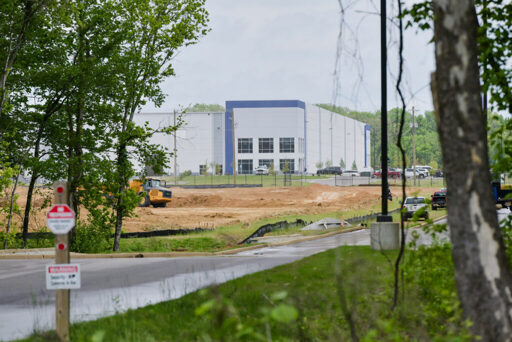
Yeah, I’m not a big fan of the “don’t build data centers here, build them there” conclusion of the report. I see no reason why we should be allowing these monstrosities to be built in the first place, they’re a total waste of essential resources.

I don’t see the AI bubble burst affecting people to the same degree; I think it’ll wipe out a lot of investment portfolios, but non tech-sector jobs should be safe. I think it’s useful to have some essentials on hand, but I wouldn’t go on a buying spree if that means draining my savings; I’d rather have the flexibility of money. If it comes down to survival and you don’t have savings, you could preemptively apply for lines of credit, use those to cover living expenses, and declare bankruptcy once they’re wrung out. Not financial advice, but it’s an effective stopgap.
You’re catching downvotes, but according to Google Trends, searches for “gold price” and “ai bubble” are positively correlated, and there’s plenty of historic precedent for people flocking to “safe haven” assets when the markets nosedive. Gold went up by 30% from Jan-Sep 2020 (COVID), and nearly doubled in value between 2007 and 2009 (housing crisis), although it did take a dip before rebounding during the dotcom bubble (2000-2003).
That said, I would recommend keeping a significant portion of your money in an HYSA as precious metals are subject to large fluctuations in price and markets don’t always behave rationally.
This is all great stuff to have on hand, but not relevant for OP’s question. They’re wondering how to prepare for the equivalent of the dotcom burst or the 2008 recession, not a grid-down scenario.

If you’d bought silver (or silver ETFs) a few months ago you would have made a whole bunch of money, and society hasn’t ended yet.
But the famous director gets hundreds of thousands every year to make shitty movies nobody sees, because that one time 20 years ago he did something good.
To be fair, this is also how it works in Hollywood.
If people think it’s a bubble, then it’s a bubble! (Self-fulfilling prophecy.) Google Trends is a decent gauge of public sentiment. That said, the fundamentals are pretty flawed too.
True, but consider that a huge amount of retail investors’ portfolios are tied to the S&P 500/NASDAQ. Think retirement savings, IRAs, 401(k)s, pensions, etc. Then consider that the entire market is effectively propped up by AI right now (see: The entire stock market is being carried by these four AI stocks). If the market gets a 60% correction, it’s going to be the middle class losing their shirts all over again.

We all have different roles to play. I’m here for the fight, but I have a few friends who are fleeing to Europe right now. I can understand both choices.
Which New England are you in? When it’s rainy/snowy, that weather sticks around for days. Generally speaking, most places with high humidity generally have more consistent weather. It’s areas with low humidity (and high elevation) where you get really big weather and temperature swings.