I think the problem is that Brexit was never about becoming ‘self-reliant’. As you said, Brexit cut the UK off from their single biggest export market, which is the exact opposite of what you need to do if you want to build up your industry. These days no country is completely self-reliant, and trying to be so, while it sounds good, just ends up meaning that you generalise, becoming mediocre at everything and exceptional at nothing.
If the Brexiteers truly wanted to make Britain great again they should have chosen a domain to be great in and lobbied for investment in it. Britain was already punching well above its weight in financial services, they could have invested further in that, for example, and become a true world leader… but only from within the single market, where they had unrestricted access to the talent and economies of the EU.
okay fair, brexit as presented was always a lie and their numbers were not only wrong, but about things that didn’t actually affect anyone. but i’ve talked to people in england who are still pro. not because of what was promised, but because what they saw was an opportunity to get stuff made locally again. and i get that.
maybe it’s a background thing. i grew up surrounded by old shuttered industry that used to make genuinely useful stuff only to be out-priced by imports, and that has continued into the 2020’s. i used to live close to the world’s most advanced paper mill of its type, but it closed and production was moved to a worse mill with lower output in another country as an economic decision. that place had been there for 200 years, the company owned its own hydro power dam and all the forests used for the pulp, the mill had its own rail connection… it was basically printing money, but dismantling it meant being able to sell the machinery for a quick buck.
like, sweden is exceptional at iron and steel. but we used to be exceptional at a lot more. turbines and jet engines. high-voltage transformers. copper. grains. cheap but safe cars. textiles. power tools. wood products. all very useful stuff that could be made entirely “in-house”. now most of that (or the constituent parts) is made elsewhere, and almost purely for economic reasons. there was no need to close that paper mill, but it was done to get the numbers to look good. when the economy goes international it feels like the people get left behind.
the way i see it is, if you black-box a country to just look at imports and exports, the lower the ratio between the two the more money the country makes. yes the salary and living situation may differ from place to place but that’s all internal, funded by those exports in some way or another. moving towards that is, in my mind, a laudable goal. and doing so in a free trade union is obviously better.
the problem is of course that it was never the goal of brexit.


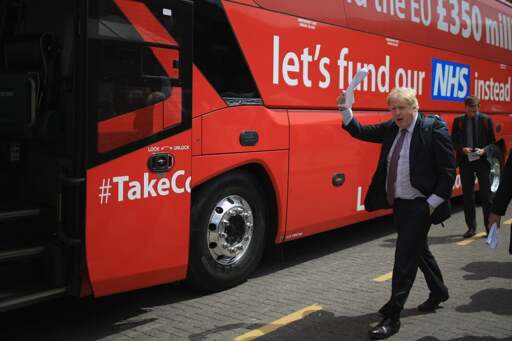
I think the problem is that Brexit was never about becoming ‘self-reliant’. As you said, Brexit cut the UK off from their single biggest export market, which is the exact opposite of what you need to do if you want to build up your industry. These days no country is completely self-reliant, and trying to be so, while it sounds good, just ends up meaning that you generalise, becoming mediocre at everything and exceptional at nothing.
If the Brexiteers truly wanted to make Britain great again they should have chosen a domain to be great in and lobbied for investment in it. Britain was already punching well above its weight in financial services, they could have invested further in that, for example, and become a true world leader… but only from within the single market, where they had unrestricted access to the talent and economies of the EU.
okay fair, brexit as presented was always a lie and their numbers were not only wrong, but about things that didn’t actually affect anyone. but i’ve talked to people in england who are still pro. not because of what was promised, but because what they saw was an opportunity to get stuff made locally again. and i get that.
maybe it’s a background thing. i grew up surrounded by old shuttered industry that used to make genuinely useful stuff only to be out-priced by imports, and that has continued into the 2020’s. i used to live close to the world’s most advanced paper mill of its type, but it closed and production was moved to a worse mill with lower output in another country as an economic decision. that place had been there for 200 years, the company owned its own hydro power dam and all the forests used for the pulp, the mill had its own rail connection… it was basically printing money, but dismantling it meant being able to sell the machinery for a quick buck.
like, sweden is exceptional at iron and steel. but we used to be exceptional at a lot more. turbines and jet engines. high-voltage transformers. copper. grains. cheap but safe cars. textiles. power tools. wood products. all very useful stuff that could be made entirely “in-house”. now most of that (or the constituent parts) is made elsewhere, and almost purely for economic reasons. there was no need to close that paper mill, but it was done to get the numbers to look good. when the economy goes international it feels like the people get left behind.
the way i see it is, if you black-box a country to just look at imports and exports, the lower the ratio between the two the more money the country makes. yes the salary and living situation may differ from place to place but that’s all internal, funded by those exports in some way or another. moving towards that is, in my mind, a laudable goal. and doing so in a free trade union is obviously better.
the problem is of course that it was never the goal of brexit.